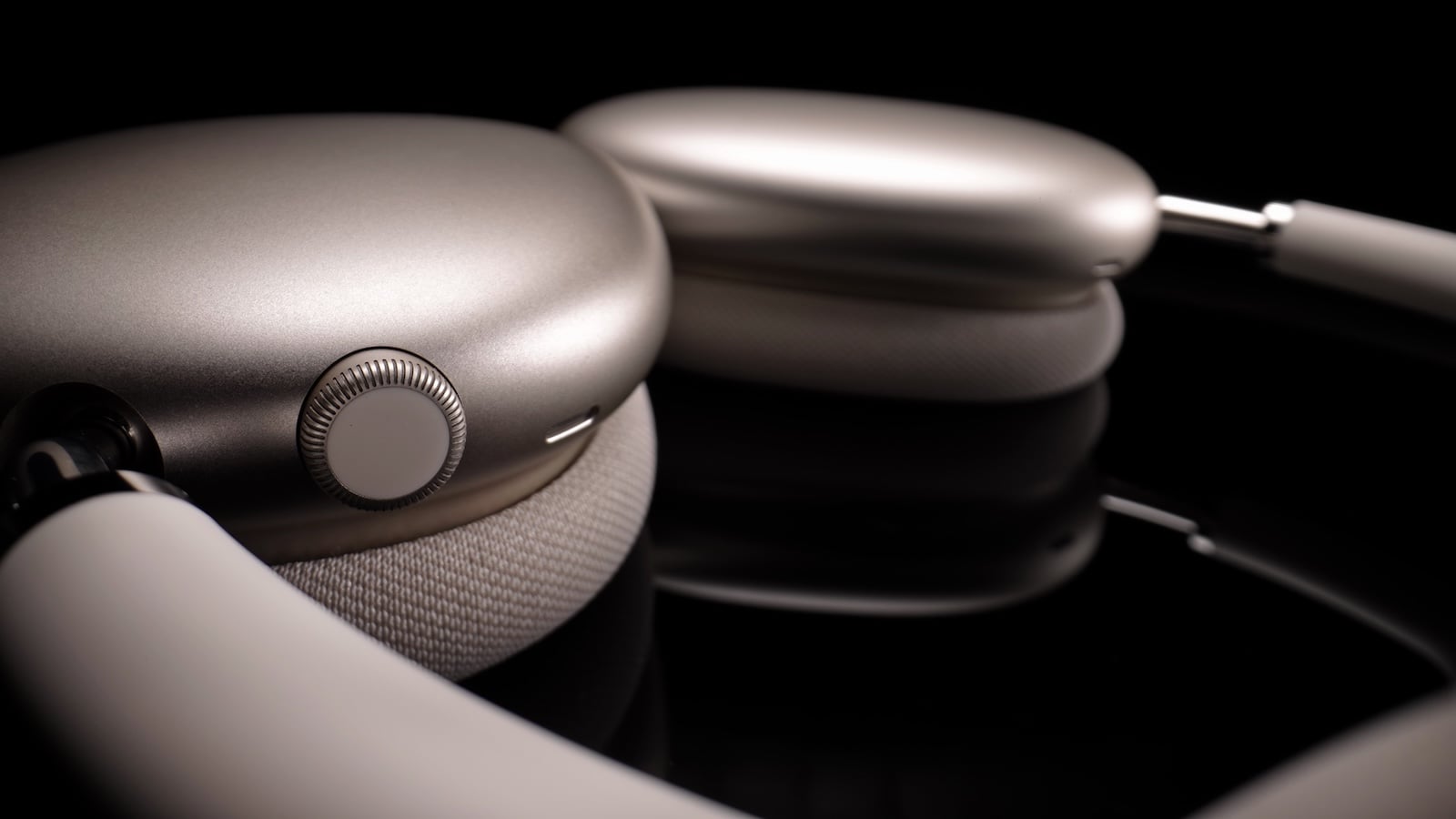
With the AirPods Max 2, Apple has introduced its first comprehensive hardware upgrade since the original release of its over-ear headphones. While the 2024 update of the AirPods Max primarily brought the switch from Lightning to USB-C, the new generation introduces significantly more technical innovations.
A comparison between AirPods Max (2020), AirPods Max (2024 with USB-C), and the new AirPods Max 2 (2026) reveals over 25 differences in chip technology, noise cancellation, Bluetooth technology, audio processing, and smart features. Particularly noteworthy are the new H2 chip, significantly improved active noise cancellation, new adaptive audio features, and enhancements to spatial audio, Bluetooth latency, and audio recording.
The following overview details the changes Apple has made, how the three generations differ, and which version remains interesting for different user groups.
When Apple unveiled the first AirPods Max in December 2020, it marked the company's first foray into the market with its own premium over-ear headphones. The model featured high-quality materials, a striking design in aluminum and stainless steel, and features such as active noise cancellation, transparency mode, and spatial audio.
A minor update followed in September 2024. Apple replaced the Lightning connector with USB-C and introduced a new color palette. Apart from that, the technical specifications remained largely identical to the original version.
With the AirPods Max 2, released in April 2026, Apple is making a significant change to the product for the first time. In addition to a new chip, several software and hardware improvements will be introduced, bringing the functionality closer to that of the current in-ear AirPods.
An overview of the three generations
The AirPods Max series now includes three versions:
AirPods Max (2020)
- Publication date: December 2020
- Connector: Lightning
- Chip: H1
AirPods Max (2024)
- Publication: September 2024
- Connection: USB-C
- Chip: H1
AirPods Max 2 (2026)
- Publication: April 2026
- Connection: USB-C
- Chip: H2
The two older models are increasingly being replaced by the new generation. The original Lightning version is now only available in isolated cases.
Design and colors
Apple has not made any major changes to the basic design with each generation. The characteristic construction with aluminum earcups, stainless steel headband, and breathable mesh headband remains.
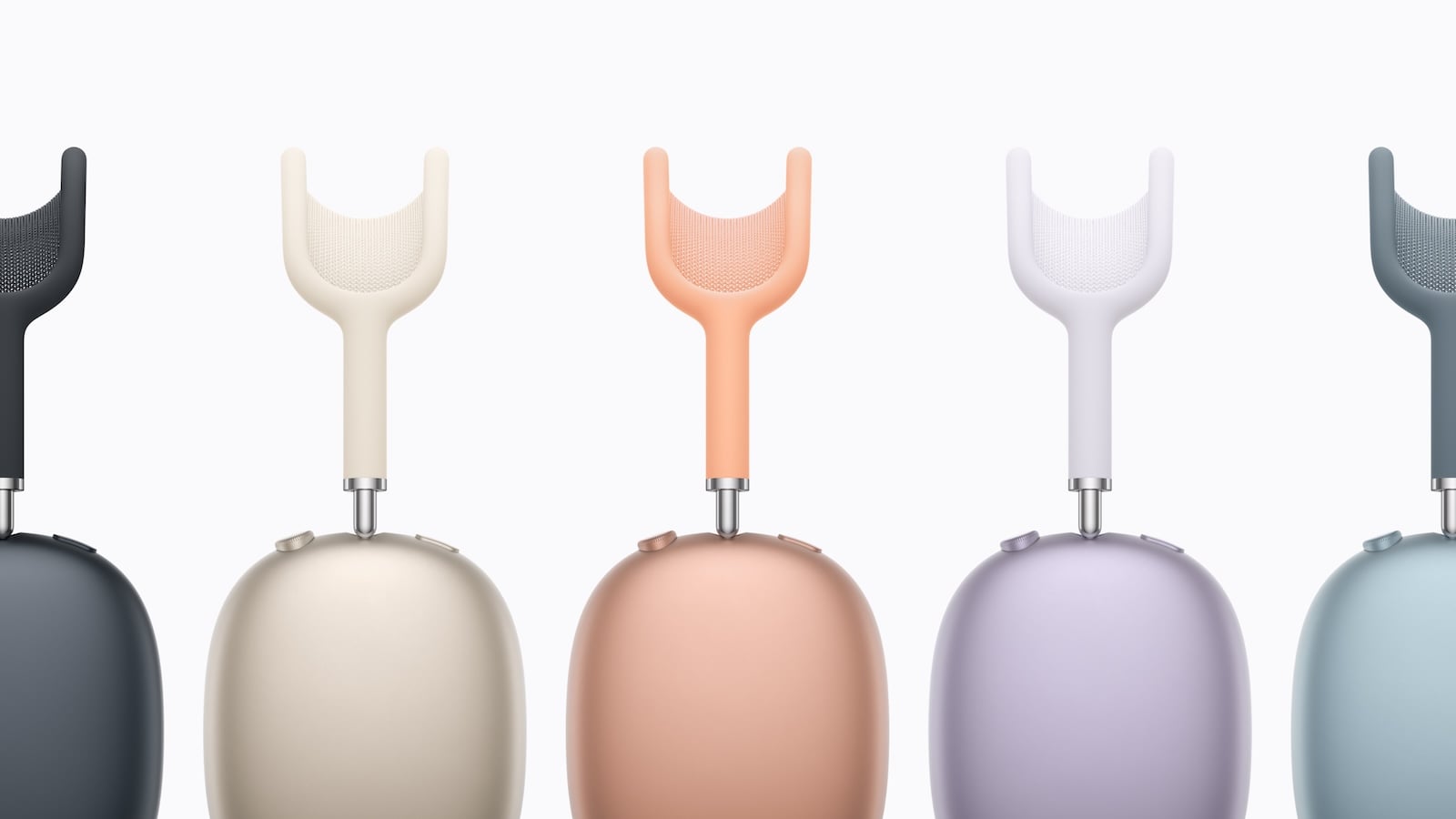
The differences are mainly evident in the color variations.
AirPods Max (2020)
- Silver
- Space Grey
- Sky blue
- Pink
- Green
AirPods Max (2024 and AirPods Max 2)
- Starlight
- Midnight
- Blue
- Purple
- Orange
The newer models therefore use a modernized color palette.
Chip technology: H1 vs. H2
One of the most important differences in the AirPods Max 2 is the switch from the H1 chip to the H2 chip.
The two older generations still use the H1 chip, which has already been used in several AirPods models. This chip performs tasks such as:
- Audio processing
- Noise cancellation
- Control of the connection
- Siri integration
The AirPods Max 2 are the first to feature the newer H2 chip. This enables more powerful audio processing and forms the basis for several new features. Improvements include, among others:
- stronger active noise cancellation
- improved transparency modes
- new adaptive audio features
- optimized sound processing
Active noise cancellation
All generations of AirPods Max feature active noise cancellation (ANC). This function reduces ambient noise using microphones and digital signal processing.
According to Apple, the noise cancellation in the AirPods Max 2 has been significantly improved. It is said to be 1.5 times stronger than in previous models. This is particularly noticeable in the following situations:
- Air travel
- Train journeys
- Office environments
- Noisy urban environments
The improved ANC performance is one of the biggest practical improvements of the new generation.
Transparency mode
In addition to noise cancellation, all AirPods Max versions feature a Transparency mode. This deliberately allows ambient sounds to pass through the headphones, so that conversations or important signals remain audible.
The AirPods Max 2 receive an improved transparency mode, which is designed to sound more natural while also better reducing distracting noise peaks.
Adaptive audio features
The new generation brings several features that automatically adapt to the environment and usage. These features are available on the AirPods Max 2:
- Conversation Awareness: The volume is automatically reduced when conversations are detected.
- Personalized volume: The playback volume adapts to listening habits and environment.
- Voice Isolation: The voice is emphasized during calls or conversations, while background noise is reduced.
- Noise reduction: Sudden loud noises are automatically reduced.
These features are based on the enhanced computing power of the H2 chip.
Spatial audio and sound enhancements
All AirPods Max models support Spatial Audio, a technology for creating spatial sound. However, the AirPods Max 2 offer several improvements:
- more precise localization of individual instruments
- more even bass reproduction
- more natural-sounding mids and highs
- optimized head-tracking algorithms
This makes the soundstage appear more realistic, especially with films and music in spatial audio formats.
Wired audio and lossless support
Wired audio still plays a role.
AirPods Max (2020)
- Lightning to 3.5 mm audio cable possible
- improved wired audio
AirPods Max (2024 and AirPods Max 2)
- USB-C port
- 24-bit audio at 48 kHz via USB-C to USB-C cable
This connection enables lossless audio.
Furthermore, the newer models support:
- Lossless Personalized Spatial Audio
- Creation and mixing of spatial audio content with head tracking
These features are particularly relevant for creative professionals.
Bluetooth technology and latency
There are also differences in the wireless connection.
AirPods Max (2020 and 2024)
- Bluetooth 5.0
AirPods Max 2
- Bluetooth 5.3
The newer version offers several advantages:
- more stable connection
- lower wireless latency
- more efficient energy management
Furthermore, the newer models support ultra-low latency over wired connections, both via USB-C to USB-C and USB-C to 3.5 mm audio cables.
New additional features of the AirPods Max 2
The AirPods Max 2 also introduce several additional features.
- Live translation: Conversations can be translated in real time.
- Camera remote control: The headphones can be used as a trigger for photos or videos.
- Enhanced Siri interaction: While older models only respond to "Hey Siri", the AirPods Max 2 support both "Hey Siri" and "Siri".
Additionally, Siri responses can be confirmed or rejected with head movements:
- Nod in confirmation
- Shaking head in rejection
Improved audio recording
Another new feature concerns the recording quality.
The AirPods Max 2 support studio-quality audio recording. This makes the headphones suitable for applications such as:
- podcasts
- Video conferences
- Content production
Availability of older models
The original AirPods Max with Lightning connector are now rarely sold new. Remaining stock may still be available from third-party retailers or as refurbished devices. Despite their age, they still offer:
- the distinctive AirPods Max design
- high-quality workmanship
- active noise cancellation
- Transparency mode
- Spatial Audio
For users who primarily listen to music wirelessly and can do without newer software features, this model remains a functional option.
The role of the 2024 USB-C model
The AirPods Max from 2024 were Apple's current model until the introduction of the AirPods Max 2. The main differences from the original model are:
- USB-C instead of Lightning
- new colors
- Support for 24-bit lossless audio at 48 kHz via USB-C
A firmware update along with iOS 18.4 also restored wired audio input.
For users who value wired audio with maximum quality, this model already offered a clear advantage over the Lightning version.
However, in everyday wireless use, the user experience remained largely identical.
Who are the AirPods Max 2 particularly suitable for?
The AirPods Max 2 are primarily aimed at users who:
- desire stronger noise suppression
- want to use the latest Apple audio features
- require the lowest possible latency
- listening to music frequently in noisy environments
- prefer the most technologically advanced version of the AirPods Max
Frequent travelers or users in busy environments especially benefit from the improved noise cancellation.
Price and possible discounts
The AirPods Max 2 will be released in April 2026 at a price of 579 euros.
However, Apple headphones are regularly offered at reduced prices by retailers like Amazon and other third-party sellers. Therefore, a purchase or upgrade can be particularly worthwhile when a discount is available.
Older models are also often offered at significantly lower prices, especially remaining stock or refurbished devices.
AirPods Max 2 vs. AirPods Max 1: The most important differences at a glance
With the AirPods Max 2, Apple is introducing its biggest update to date for its over-ear headphones. The switch to the H2 chip, 1.5 times stronger noise cancellation, Bluetooth 5.3, new adaptive audio features, improved spatial audio processing, and studio audio recording significantly expand the range of functions.
The older models remain functional and still offer the characteristic premium design and basic audio features. However, the new generation clearly positions itself as the most technologically advanced version of the AirPods Max.
For those who value the latest Apple audio features, enhanced noise cancellation, and state-of-the-art hardware, the AirPods Max 2 offer the most comprehensive package in the entire series. The best products for you: Our Amazon storefront offers a wide selection of accessories, including those compatible with HomeKit. (Image: Shutterstock / Stock Holm)
- iOS 27: These are the new features Apple is planning for the iPhone
- M6 MacBook Pro: Apple plans major changes
- Apple 2026: These new devices are still expected
- MacBook Neo changes the role of the iPad as a laptop replacement
- Apple TV 2026: Why Apple prefers to wait rather than rush into delivery
- MacBook Neo: Why this Apple notebook is so important
- MacBook Neo vs. MacBook Air: The most important differences
- Studio Display vs. Studio Display XDR: All the differences
- M5 MacBook Air vs. M4 MacBook Air: The differences
- iPhone 17e vs. iPhone 16: Which one is worth it?
- iPhone 17e vs. iPhone 16e: All the differences
- M4 iPad Air vs. M3 iPad Air: All the differences
- iPhone 17e vs. iPhone 17: The most important differences
- Apple TV in March 2026: All the Highlights
- Apple Watch Ultra 4 brings major improvements
- Apple will be using OLED displays in several devices in the future
- macOS 27: All rumors, features & release date
- tvOS 26.4: Here's what's changing for Apple TV 4K
- iOS 27: An update with a hidden highlight
- iOS 26.4: When will the big iPhone update be released?
- Why AirPods will be Apple's first AI product
Frequently asked questions about AirPods Max 2 vs. AirPods Max 1
The AirPods Max 2 bring several technical improvements over the original AirPods Max 1 from 2020. Key changes include the new H2 chip, 1.5x more powerful active noise cancellation, Bluetooth 5.3 with lower latency, and new adaptive audio features such as Conversation Awareness, Voice Isolation, and personalized volume. Spatial Audio has also been improved, and studio-quality audio recording is now possible.
According to Apple, the AirPods Max 2 will be released in April 2026. This will be the first major technical update to the over-ear AirPods since the original introduction of the AirPods Max in December 2020.
The AirPods Max 2 are equipped with the Apple H2 chip. Previous models—both the 2020 Lightning version and the 2024 USB-C update—use the H1 chip. The H2 chip enables improved audio processing, more efficient noise cancellation, and new adaptive audio features.
Yes. According to Apple, the active noise cancellation of the AirPods Max 2 is about 1.5 times stronger than that of the previous AirPods Max. This allows for even more effective reduction of disruptive noise in airplanes, trains, or office environments.
Yes. Like the 2024 USB-C model, the AirPods Max 2 also support lossless 24-bit/48kHz audio when connected via a USB-C to USB-C cable. They also enable lossless personalized spatial audio and the creation and mixing of spatial audio content with head tracking.
The AirPods Max 2 bring several new features, including:
• Conversation Awareness
• Personalized volume
• Voice Isolation
• Reduction of loud noises
• Live translation
• Camera remote control
• Siri interactions via head movement
These features are made possible by the new H2 chip and improved audio processing.
Yes. The AirPods Max 2 support Bluetooth 5.3, while the older models use Bluetooth 5.0. This results in a more stable connection, lower latency, and more efficient power management.
The AirPods Max 2 are available in the following colors:
• Starlight
• Midnight
• Blue
• Purple
• Orange
This color palette corresponds to the already introduced selection of the USB-C version from 2024.
The AirPods Max 2 will be released at a price of €579. However, Apple headphones are frequently offered at a discount by retailers and online shops, so the actual selling price may be lower depending on the offer.
An upgrade can be particularly worthwhile if you value improved noise cancellation, new audio features, Bluetooth 5.3, and the H2 chip. However, users who already own the 2024 USB-C model and are satisfied with its current features might find the differences less significant.