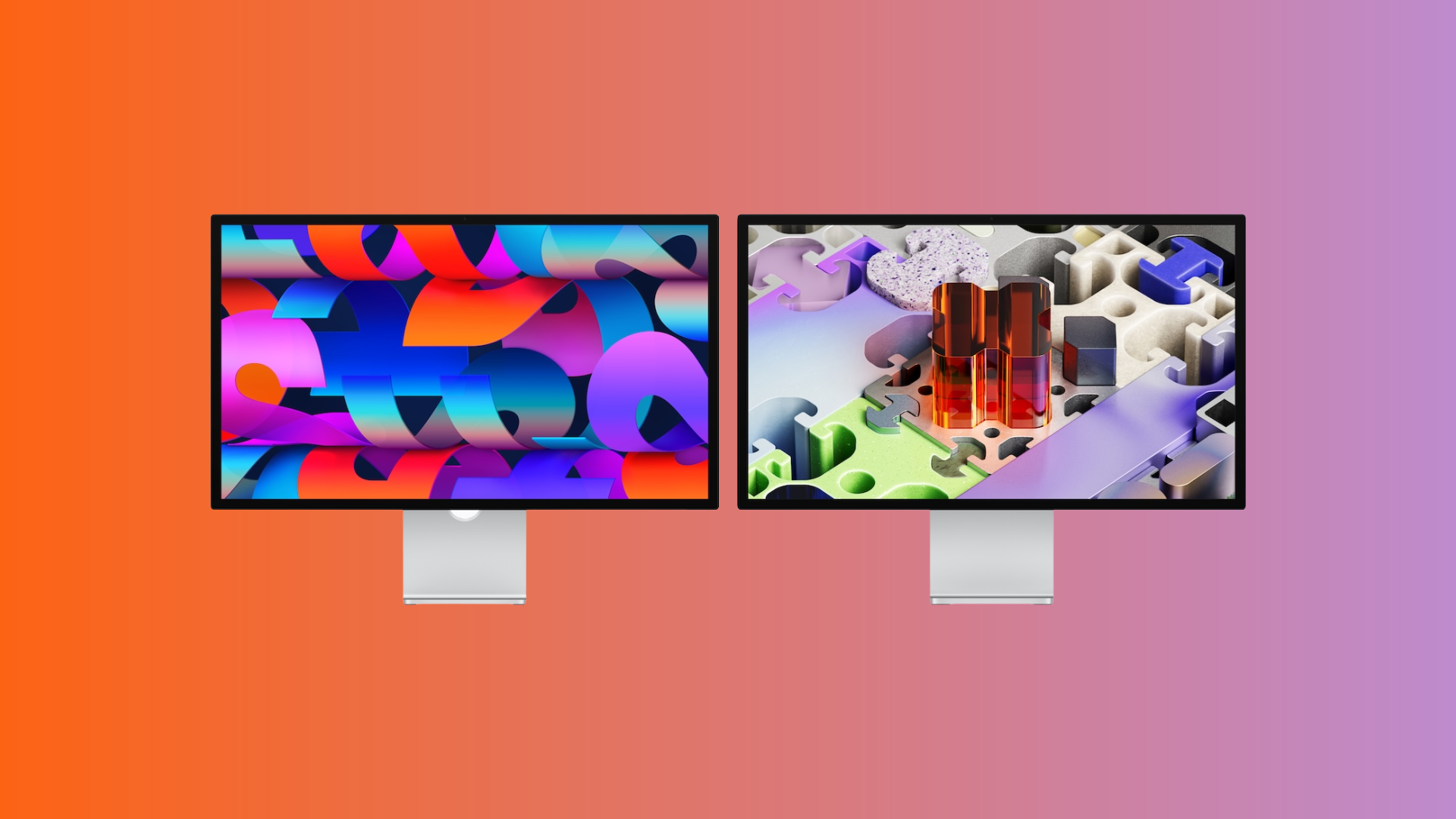
Apple is launching two new monitor options: the new Apple Studio Display XDR and the updated Apple Studio Display. Both displays are scheduled for official release on Wednesday, and numerous reviews have already been published ahead of the launch.
The first reviews paint a clear picture: While the regular Studio Display receives only minor improvements, the Apple Studio Display XDR is generating the most buzz. Many reviewers describe it as a significant upgrade from the earlier Pro Display XDR, which was Apple's most expensive monitor model for a long time. At the same time, several media outlets point out that some limitations exist – especially compared to modern OLED displays.
With these new monitors, Apple continues its strategy of offering high-quality displays specifically for Mac users. The Studio Display is aimed more at general users, while the Studio Display XDR represents the more demanding option.
The previous Pro Display XDR, which cost around €6,000, is now being replaced by the new model. Apple is using a mini-LED backlight, a higher refresh rate, and a range of additional features.
However, initial tests also show that the new display doesn't outperform other technologies in every respect. Particularly compared to OLED screens, some testers still see advantages in contrast and viewing angles.
Apple Studio Display: Minor improvements to the standard model
In addition to the new XDR model, an updated version of the regular Apple Studio Display will also be released.
According to The Verge, this model still uses the same display panel as its predecessor. Therefore, the basic image quality remains unchanged. Changes are primarily in other components. Improvements include:
- the integrated camera
- the speakers
- the connections
According to the test report, the maximum brightness remains unchanged, and there also appear to be no major changes in the overall display quality. The standard Studio Display thus represents more of a minor update than a fundamental overhaul.
Apple Studio Display XDR: The real focus of the new generation
The Apple Studio Display XDR is receiving significantly more attention. According to several reviews, it is the more interesting update, as it replaces the previous Pro Display XDR.
The Verge describes the new display as a "great improvement" over its predecessor. The main reason for this is the mini-LED backlight, which allows for better brightness control.
The tests showed that images and text appear particularly sharp and clear. At the same time, the local dimming control ensures that light loss is largely minimized.
However, a difference to OLED technology remains. Mini-LED displays still exhibit a certain blooming effect, meaning a slight glow around bright areas of the image. According to test reports, the viewing angles are also somewhat narrower than those of OLED displays.
High brightness and precise presets
Another important point in the reviews is the brightness of the new display. According to tests, the Apple Studio Display XDR can reach a peak brightness of up to 2,000 nits.
According to The Verge, this brightness remains consistently high. Even at a normal sitting distance at a desk, the display therefore appears very bright.
The preset color profiles were also positively reviewed. They are considered precise and enable reliable rendering for creative work. Apple also integrates several other features:
- a 12-megapixel camera for video conferencing
- Integrated speakers that are loud enough for videos, music, and calls.
This means the display offers not only high image quality, but also extensive features for everyday use.
YouTuber Marques Brownlee: "Better in every way"
Even well-known tech reviewers have already tested the new display. YouTuber Marques Brownlee describes the Apple Studio Display XDR as "better in every way" than the previous Pro Display XDR. In his review, he highlights several improvements:
- higher brightness
- better contrast
- less blooming
The display also features a Thunderbolt port, which offers additional connectivity options.
Another important feature is the 120 Hz refresh rate. This makes the display a particularly good match for the MacBook Pro, which also operates at a 120 Hz refresh rate.
Brownlee describes the setup of a MacBook Pro and Studio Display XDR as nearly ideal. At the same time, he emphasizes that Apple is apparently not targeting exclusively professional users with this display. The market for purely professional monitors is relatively small, which is why the product may have been designed for mixed use.
Unique combination of resolution, mini-LED and frame rate
Another point highlighted in several reviews is the unusual combination of technical features. The Apple Studio Display XDR offers:
- a 27-inch 5K display
- Mini-LED technology
- a refresh rate of 120 Hz
According to the reviews, there are currently no direct competing products that offer this combination. Other manufacturers are not currently producing 27-inch 5K mini-LED displays with this refresh rate.
Criticisms of the Apple Studio Display XDR
Despite many positive impressions, some reviews also mention points of criticism.
The website PetaPixel initially praises the build quality, describing it as "phenomenal." At the same time, the review criticizes several design choices. These include, among other things:
- a permanently integrated power cable
- sharp edges on the stand
- relatively thick display bezels
There were also limitations in color gamut coverage. According to PetaPixel, the display achieves a maximum coverage of 86 percent with the Adobe RGB profile.
Additionally, the testers noticed a slight contrast deviation in the upper right corner of the display. This is slightly above the acceptable threshold. According to the report, however, most users are unlikely to notice this difference.
HDR performance and comparison to OLED
The display of HDR content was rated particularly positively. According to PetaPixel, HDR videos look spectacular and show no judder or flickering.
The halo effect – the light halo around bright objects – also remains relatively minimal. Nevertheless, according to the test, the display doesn't quite reach the quality of OLED technology.
The reason is simple: Mini-LED technology remains technically LED. Therefore, contrast and black levels cannot fully compete with OLED.
Nevertheless, PetaPixel emphasizes that only a few manufacturers develop displays that simultaneously:
- extremely bright
- HDR compatible
- very color accurate
- and are equipped with Thunderbolt 5 support
According to the report, the display that comes closest to the new Apple model is the Asus ProArt OLED Display.
Apple Studio Display XDR: A major improvement with minor weaknesses
The first Apple Studio Display XDR reviews paint a clear picture. Apple has achieved a noticeable improvement with the new display compared to the previous Pro Display XDR.
The combination of Mini-LED technology, 5K resolution, 120Hz refresh rate, and high brightness delivers impressive image quality. At the same time, its price makes it particularly attractive for professional users or demanding Mac setups.
Despite minor criticisms regarding design, color gamut coverage, and comparison to OLED technology, the Apple Studio Display XDR is among the most technically ambitious monitors currently available on the market. (Image: Apple)
- macOS 26.4 brings MacBook Neo wallpapers to all Macs
- iOS 26.4: New emojis for iPhone, iPad & Mac
- iOS 26.4 Beta 4 is here: Apple continues the testing phase
- Apple now integrates MagSafe into every new iPhone
- M4 iPad Air Reviews: Apple's powerful tablet just got better
- iPhone 17e: Initial reviews praise the new budget model
- Apple turns 50: Tim Cook calls Apple "unique"
- MacBook Air with M5: Benchmark shows significant improvement
- Apple is restructuring its leadership: New names in management
- MacBook Neo: Apple focuses on design despite the low price
- iPhone 17e: Initial benchmarks show strong CPU performance
- Apple TV confirms: Silo season 4 has already been filmed
- Apple TV releases teaser for Ted Lasso Season 4
- Apple TV wins two awards at the GLAAD Media Awards
- Apple and Sydney Opera House support creative talent
- MacBook Neo: Initial benchmarks reveal its potential
- Apple M5 Max sets a true benchmark record
- Mac Studio: 512GB RAM upgrade no longer available for order
- OpenAI introduces GPT-5.4: More performance for ChatGPT
- John Ternus talks about MacBook Neo, AI and CEO rumors
- MacBook Neo could drastically change the notebook market
- MacBook Neo: New Studio Displays only usable to a limited extent
- Pentagon decision on Anthropic draws criticism