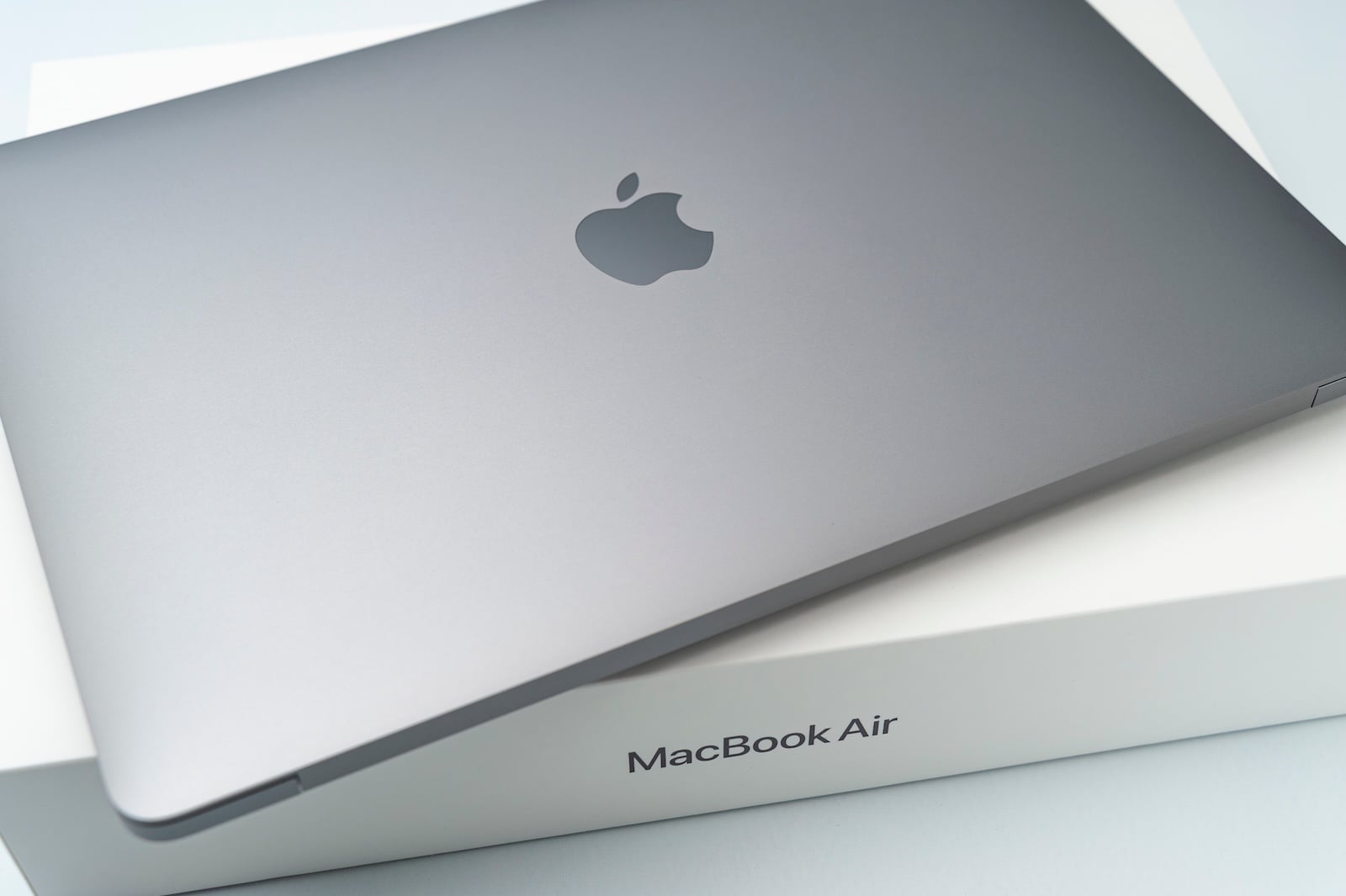
The MacBook Air is one of the most important products in Apple's notebook portfolio. It stands for a slim design, solid performance, and a comparatively moderate price within the MacBook line. A fundamental technological change is now on the horizon for 2028: The MacBook Air is expected to be equipped with an OLED display for the first time.
According to Bloomberg, Apple will switch from the current LCD display to OLED technology in the MacBook Air in 2028. This move is not an isolated one, but part of a broader display strategy. Apple reportedly plans to gradually transition several key iPad and MacBook models to OLED. The expected order of the transition is:
- iPad mini
- MacBook Pro
- iPad Air
- MacBook Air
Apple already uses OLED technology in the iPad Pro. Currently, there are no plans to use OLED technology in the standard, more affordable iPad.
Apple's OLED strategy in detail
MacBook Pro ahead of MacBook Air
According to reports, the MacBook Pro will also receive an OLED display in its next major redesign. This update could potentially happen later this year.
It is also reported that the MacBook Pro could be equipped with touchscreen functionality in the future. In addition to Mark Gurman, Apple analyst Ming-Chi Kuo also believes that Apple is considering touch support. If this is true, it would represent a significant expansion of the current user interface philosophy for MacBooks.
Interim solution with M5 chip
Before the OLED MacBook Air is released, Apple is apparently planning a regular hardware update. The MacBook Air is expected to be equipped with M5 chips in the near future. However, this model will still use an LCD display.
If Apple sticks to its annual upgrade cycle, the first MacBook Air with an OLED display should appear in 2028. In this scenario, it would likely be equipped with an M7 chip.
Gurman had previously reported that Apple had already begun initial work internally on an OLED MacBook Air. This suggests a long-term development strategy.
Technical advantages of an OLED MacBook Air
The switch from LCD to OLED brings several concrete improvements:
- Higher brightness: OLED displays can achieve higher peak brightness levels. This makes content appear clearer and with higher contrast, especially in bright image areas or HDR content.
- Deeper blacks and stronger contrast: Unlike LCDs, OLEDs don't require backlighting. Each pixel is self-illuminating and can be completely switched off. As a result, black areas appear truly black, significantly increasing contrast.
- Improved energy efficiency: OLED can operate more efficiently in certain scenarios, especially with dark scenes. This can have a positive impact on the MacBook Air's battery life, which is particularly relevant for a mobile device.
- Potential for slimmer designs: Since OLED panels do not require separate backlighting, the display module can be made thinner. This opens up possibilities for further design optimizations.
MacBook Air as part of Apple's OLED strategy
The planned switch to OLED for the MacBook Air fits into a clear product strategy. Apple first introduces new display technologies in higher-priced models like the iPad Pro and the MacBook Pro before integrating them into broader product lines.
With an OLED display, the MacBook Air would be technically closer to the Pro models without necessarily adopting their complete specifications. At the same time, the affordable standard iPad apparently remains with LCD, suggesting a deliberate differentiation within the product line.
MacBook Air poised for a major OLED revolution starting in 2028
The year 2028 is expected to be a turning point for the MacBook Air. The switch from LCD to OLED represents one of the most significant display changes in the device's history.
Apple is expected to update the MacBook Air with M5 chips before then, while the OLED model will likely feature an M7 chip. At the same time, the MacBook Pro is expected to switch to OLED earlier and may even gain touchscreen functionality.
Overall, this indicates a long-term planned transition to OLED technology in key Apple products. The MacBook Air is expected to be the final step in this process. (Image: Shutterstock / Sergio Yoneda)
- WWDC 2026: Apple replaces Core ML with Core AI in iOS 27
- iPad Pro 2027 brings internal technology upgrade
- iPad Fold: Huge display, uncertain future
- MacBook in price focus: Apple targets upgraders
- Studio Display 2: New details about the upgrade
- Apple March 2026 Announcements: Focus on New Chips
- Apple plans to launch Apple Pay in India
- MacBook leak reveals tough cost-cutting measures
- Affordable MacBook coming: Price and details
- iPhone Fold: Production orders confirm market launch 2026
- iPhone 18 Pro gets smaller Dynamic Island
- MacBook Pro 2026: Touchscreen becomes reality
- iPhone Fold: Mystery surrounding missing production leaks
- iPhone 18 Pro enters crucial testing phase
- This is how Apple intends to win the AI competition in the long term
- Apple March Event 2026: Five new products expected
- iPhone 18 Pro: Apple tests new Deep Red color
- OpenAI plans smart speaker with camera
- MacBook 2026: Color ideas are still from 2022
- macOS 26.3 code reveals three new Apple products
- Apple Experience: Is Immersive F1 coming?
- Meta launches a new attack in the smartwatch market
- MacBook 2026: These colors are planned
- Apple could surprise with a product week in March