With the release of visionOS 26.4 Beta 1, Apple introduces a key new feature for the Apple Vision Pro: Foveated Streaming for apps and games. The update also supports new video features in Apple Podcasts. While the podcast enhancement seems primarily functional, Foveated Streaming has the potential to transform how resource-intensive VR and mixed reality content is delivered on the Apple Vision Pro.
visionOS 26.4 is not just a maintenance update. With support for NVIDIA CloudXR, including foveated streaming, Apple is opening the platform up more to cloud-based rendering and external computing power. The official release notes state:
visionOS 26.4 supports NVIDIA CloudXR with Foveated Streaming, allowing apps to display high-resolution, immersive content with low latency on Apple Vision Pro.
This statement is technically precise, but points to a larger strategic development: Computationally intensive content no longer needs to be processed entirely locally on the Apple Vision Pro.
What Foveated Streaming means in visionOS 26.4
Foveated streaming is based on a simple principle: only the areas that are in the current field of view are streamed in the highest quality.
The system uses information about the approximate area a person is currently viewing. Content outside this focus area is transmitted or rendered at a lower quality. This allows for more efficient use of resources. Specifically, this results in:
- Reduced latency
- Higher perceived image quality in the focus area
- Reduced load on local hardware
- More efficient use of bandwidth
This is particularly relevant for VR and mixed reality applications, as they require high resolution, stable frame rates and low latency.
NVIDIA CloudXR integration
A key component of visionOS 26.4 is support for NVIDIA CloudXR. This is a third-party technology already used on other VR and computing platforms. Its integration into visionOS 26.4 makes the following possible:
- Streaming VR applications from a desktop computer
- Transferring content from a cloud server to the Apple Vision Pro
- Bringing existing VR projects to the Apple platform
Apple describes in the developer documentation:
If you have an existing virtual reality game, experience, or application built for desktop computers or a cloud server, you can stream it to Apple Vision Pro with the Foveated Streaming framework. Foveated Streaming allows your endpoint to stream high quality content only where necessary based on information about the approximate region where the person is looking, ensuring performance. On Apple Vision Pro, you can also layer native spatial content over the streamed content. For example, a racing game can render the gauges in the interior of the car with RealityKit, and stream the processor-intensive outdoor environment from a remote computer to the device.
This significantly lowers the barrier for developers. Instead of developing entire applications from scratch, existing VR projects can be adapted and streamed.
Combination of local rendering and streamed content
visionOS 26.4 also allows native spatial content to be combined with streamed content. This is a crucial point. Apple provides specific examples.
Example: Racing game
In a racing game, you can:
- The cockpit and interior displays of the vehicle are rendered locally using RealityKit.
- The processor-intensive external environment is streamed from a remote computer to the device.
This keeps the user interface responsive and clear, while complex environments are outsourced.
Example: Flight simulator
Another example is a flight simulator app:
- The cockpit is rendered locally using RealityKit.
- The elaborate landscape is streamed from a remote computer to the Apple Vision Pro.
This hybrid model combines local precision with external computing power.
Impact on existing visionOS apps
The new feature isn't just relevant for newly developed applications. Existing visionOS apps could also benefit from Foveated Streaming. By offloading particularly computationally intensive processes, the following becomes possible:
- Increase graphical detail
- Depicting more complex scenarios
- Implement larger virtual environments
It is unknown whether Apple currently uses native visionOS apps that utilize this technology. It remains unclear to what extent Apple will initially demonstrate or implement the feature itself.
Further new features in visionOS 26.4
In addition to Foveated Streaming, visionOS 26.4 Beta 1 also supports new video features for Apple Podcasts. This further expands the multimedia capabilities of the platform.
However, from a technical standpoint, the CloudXR integration is clearly the main focus of the update.
Strategic importance of visionOS 26.4
With visionOS 26.4, Apple is moving further towards cloud-supported mixed reality experiences. The combination of:
- Eye-tracking
- Foveated rendering or streaming
- Cloud-based computing power
- Support for an established third-party technology
can simplify the development of performance-intensive applications.
Since NVIDIA CloudXR is already used on other platforms, there is a possibility that existing VR and XR applications can be more easily transferred to Apple Vision Pro.
New possibilities for VR development under visionOS 26.4
visionOS 26.4 introduces Foveated Streaming, a significant technical enhancement for apps and games on the Apple Vision Pro. Support for NVIDIA CloudXR enables the streaming of high-resolution, immersive content with low latency.
The combination of local rendering and outsourced computing power creates new opportunities for developers. At the same time, existing VR projects could be more easily ported to the platform.
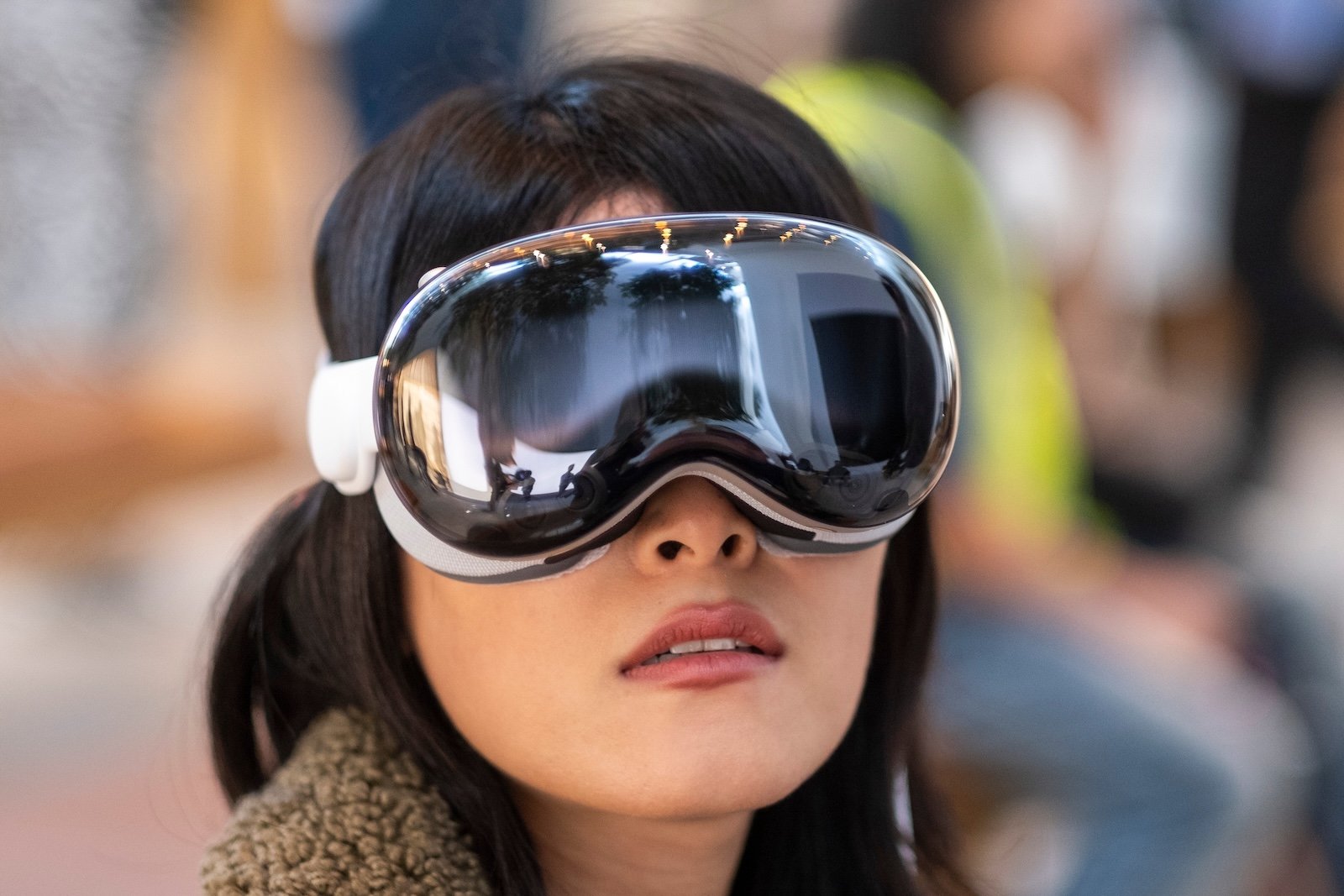
visionOS 26.4 is therefore a functional beta update with a clear technical focus. Its long-term significance depends on how consistently developers and Apple itself implement foveated streaming in future applications. (Image: Shutterstock / Ringo Chiu)
- macOS 26.4 & iPadOS 26.4 with Safari update
- macOS 26.4 begins the final phase for Rosetta 2
- iOS 26.4: These are the new features in Apple Music
- iOS 26.4: New structure for wallpapers
- iOS 26.4: New standard for iPhone security
- iOS 26.4: New RCS encryption in beta testing
- Apple is expanding Apple Podcasts into a video hub
- iOS 26.4 Beta launched: Apple opens new testing phase
- Apple Music: New features for TikTok
- Apple announces „Apple Experience“ on March 4, 2026
- OpenAI hires OpenClaw developer Peter Steinberger
- Apple and iWork: Is the brand facing its end?
- Apple replaces SEED with new Sales Coach App
- Apple shows rollout of iOS 26 and iPadOS 26
- Mac Studio: Do Shortages Indicate an Update?
- Meta plans facial recognition for smart glasses
- Apple wins third patent lawsuit against Optis
- Apple study reveals expectations for AI agents
- Apple assures: New Siri will arrive as promised in 2026
- Google: EU targets advertising business
- Apple releases new beta firmware for AirPods
- The YouTube App for Apple Vision Pro is here