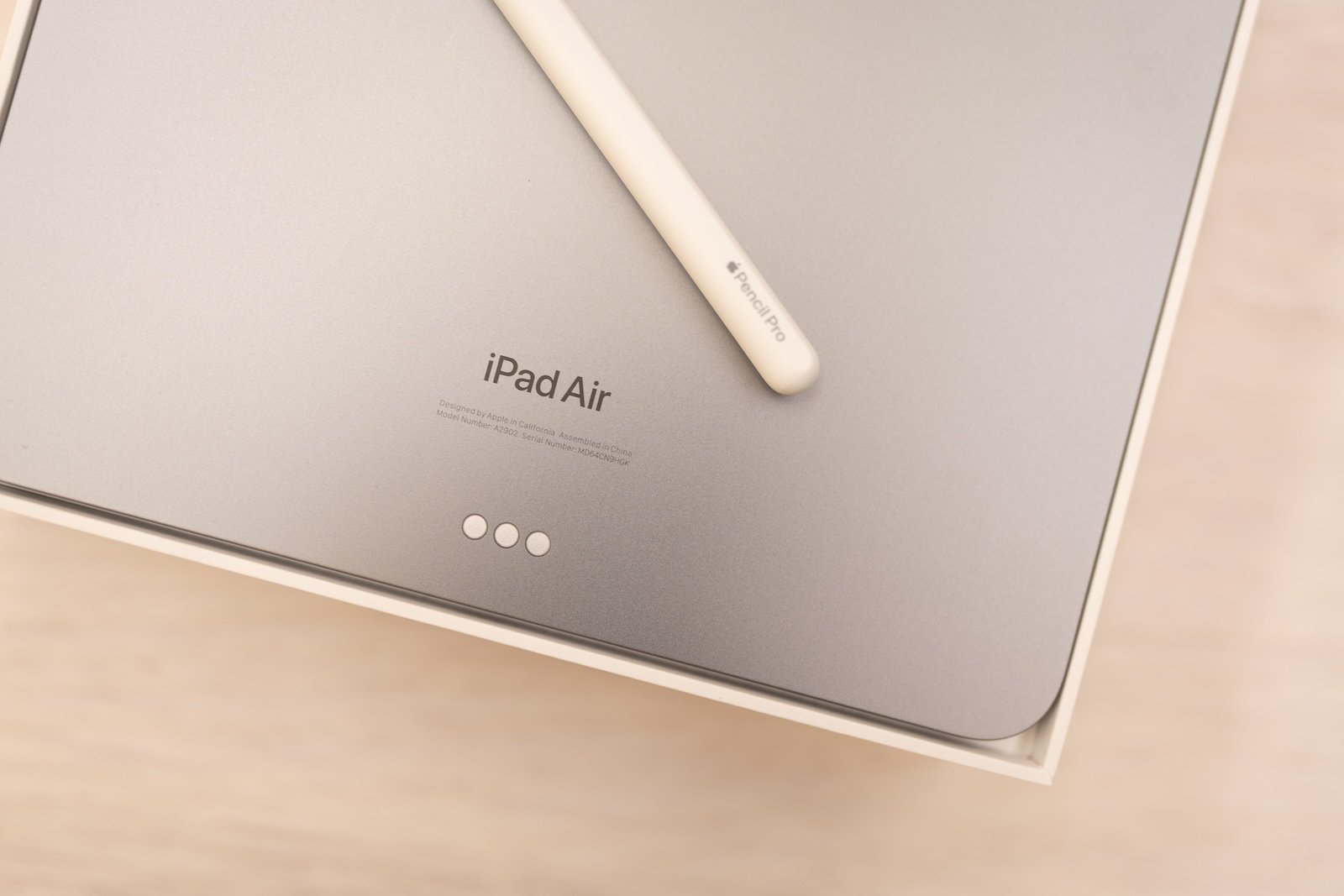
The iPad Air has been one of the most popular tablets in Apple's lineup for years. Positioned between the standard iPad and the iPad Pro, it offers high performance at a relatively moderate price. With the new M4 iPad Air, Apple has updated the series technically without changing its external appearance.
At first glance, the new model appears almost identical to last year's iPad Air M3. However, there are several important innovations inside. The focus is clearly on more power, more RAM, and more modern wireless standards.
Minor chip updates often seem unremarkable. Ten or twenty percent more performance isn't always immediately noticeable in everyday use. However, this changes with iPadOS 26. The new operating system brings significantly more sophisticated features, especially in the areas of AI and system intelligence.
While iPadOS 18 ran smoothly with 8 GB of RAM, the requirements increase with iPadOS 26. This is precisely where the new iPad Air comes in. It's not primarily aimed at users of the M3 model, but rather at owners of older devices like the M1 iPad Air or even earlier generations.
M4 chip: Up to 30 percent faster
The most significant change is the switch from the M3 to the M4 chip. Apple states that the M4 iPad Air is "up to 30 percent faster" than the iPad Air with the M3. How noticeable this difference is in everyday use depends on the application. For simple tasks, the difference will likely be minimal. With more demanding applications, multitasking, or computationally intensive workflows, the performance increase will be more pronounced.
The progress becomes even clearer when compared with older models:
- Up to 2.3 times faster than the iPad Air with M1
- The Neural Engine is 3 times faster than in the M1 model
Especially with iPadOS 26 in mind, the more powerful chip makes sense. The new features are significantly more demanding than under iPadOS 18, which means the additional performance is used more effectively.
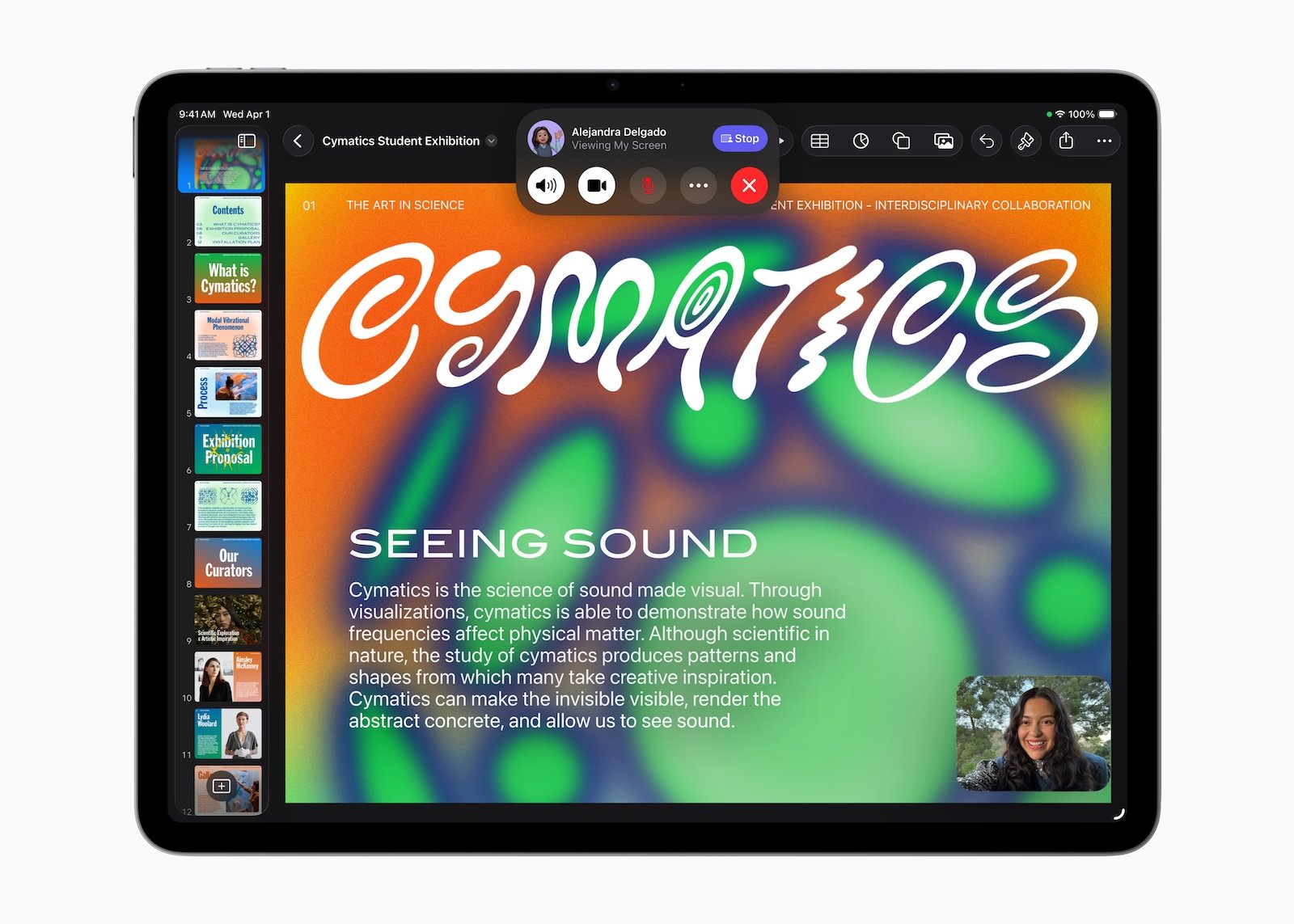
Importantly, the M4 model is not designed as an upgrade for M3 users, but as a future-proof option for owners of older iPads.
12 GB RAM and higher memory bandwidth
A key feature of the M4 chip is the increased unified memory. The new M4 iPad Air has 12 GB of RAM, compared to 8 GB for the M3 model. This represents a 50 percent increase.
Additionally, the storage bandwidth has been increased to 120 GB/s. This higher bandwidth can be particularly beneficial for local AI models and memory-intensive applications.
Before iPadOS 26, the iPad Air with 8GB of RAM was already very powerful. However, with the new demands of AI and system functions, 12GB is a worthwhile upgrade. This makes the device better prepared for modern software and future developments.
C1X modem: Faster data and more efficient energy consumption
The cellular model also features another new addition: the C1X modem. The C1X is Apple's own cellular modem and replaces the previous third-party solution from the M3 model in the M4 iPad Air. It was initially introduced in the iPhone Air and later also used in the M5 iPad Pro. According to Apple, the C1X modem offers:
- Up to 50 percent faster mobile data performance
- Up to 30 percent lower modem energy consumption during active use
Officially, the stated battery life of the M4 iPad Air remains identical to that of the M3 model. In practice, however, the new modem can have a positive impact on battery life, especially if the device is frequently used on a cellular network.
Faster data transmission and improved energy efficiency are particularly relevant when traveling.
N1 wireless chip: Wi-Fi 7 and Bluetooth 6
In addition to the new modem, Apple is also using the new N1 wireless chip in the M4 iPad Air. The N1 chip replaces the previous solutions for Wi-Fi, Bluetooth, and Thread. It was first introduced in the iPhone 17 series last fall.
The inclusion of the N1 chip in the M4 iPad Air offers several technical improvements:
- Support for Wi-Fi 7 instead of Wi-Fi 6E in the M3 model
- Bluetooth 6 instead of Bluetooth 5.3
- Improved performance when connecting to 5 GHz Wi-Fi networks
- Improved overall performance and higher reliability for features such as Personal Hotspot and AirDrop
Wi-Fi 7 enables higher speeds and lower latency. Bluetooth 6 improves efficiency and connection stability. Even though many networks currently still use Wi-Fi 6 or 6E, the iPad Air M4 is technically prepared for the coming years.
What remains unchanged?
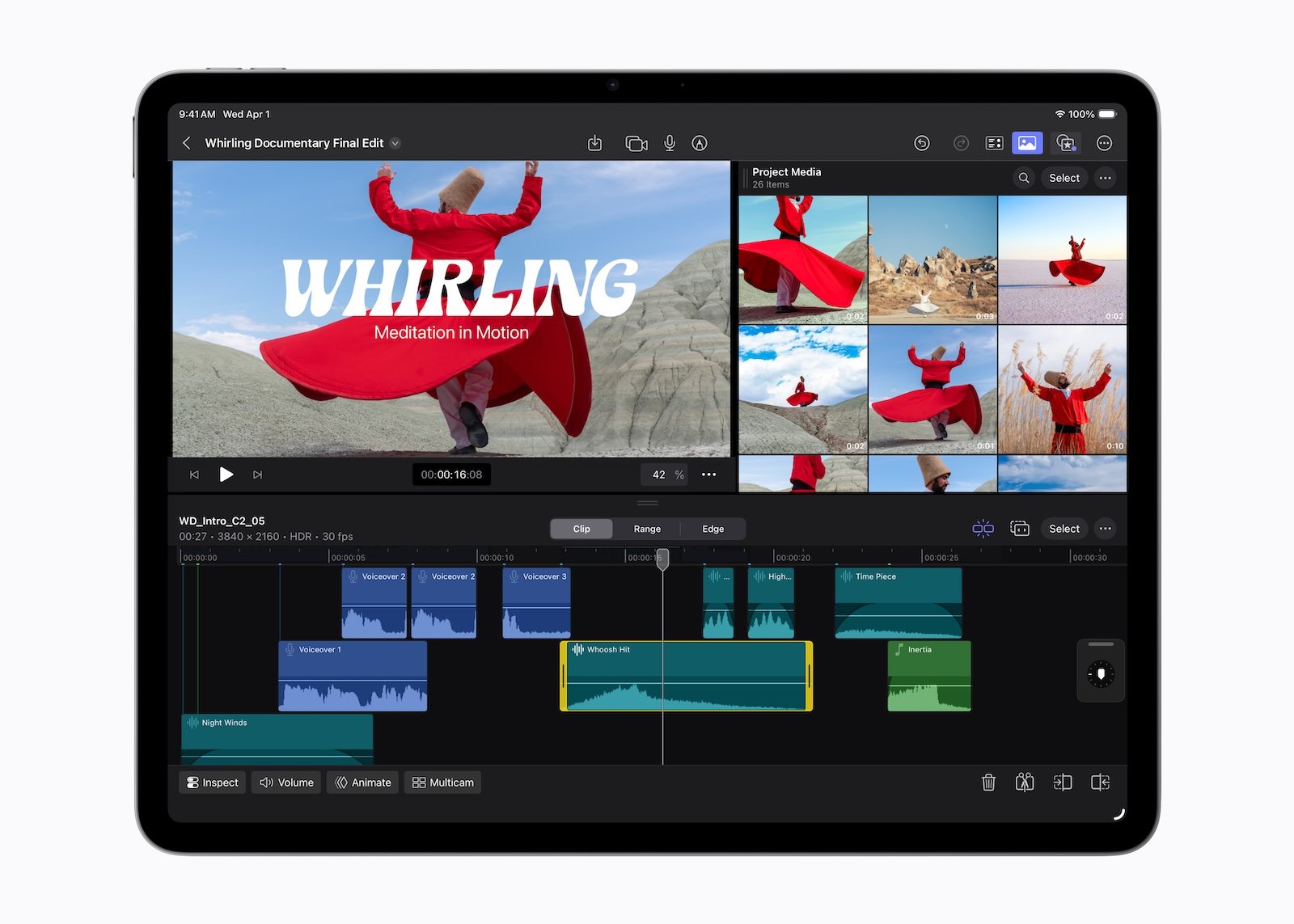
Apart from the four upgrades mentioned, the M4 iPad Air remains largely identical to its predecessor.
- Same design
- Same sizes
- Same color options
- Same prices
Visually, the M3 and M4 models are indistinguishable. The differences lie solely in the internal hardware.
M4 iPad Air vs. M3 iPad Air: The most important differences at a glance
The M4 iPad Air brings targeted but clear improvements over the M3 model. The new chip delivers up to 30 percent more performance. RAM increases to 12 GB, and storage bandwidth to 120 GB/s. The C1X modem improves cellular speed and energy efficiency. The N1 wireless chip brings Wi-Fi 7, Bluetooth 6, and optimized connection stability.
For owners of an M3 iPad Air, the upgrade is not strictly necessary. However, for users of older models, especially those with an M1 or earlier, the new iPad Air represents a significant performance leap.
Overall, the iPad Air concept remains unchanged. The updates primarily ensure greater future-proofing and better compatibility with iPadOS 26 and future software generations. The best products for you: Our Amazon storefront offers a wide selection of accessories, including those compatible with HomeKit. (Image: Shutterstock / Dontree_M)
- iPhone 17e vs. iPhone 17: The most important differences
- Apple TV in March 2026: All the Highlights
- Apple Watch Ultra 4 brings major improvements
- Apple will be using OLED displays in several devices in the future
- macOS 27: All rumors, features & release date
- tvOS 26.4: Here's what's changing for Apple TV 4K
- iOS 27: An update with a hidden highlight
- iOS 26.4: When will the big iPhone update be released?
- Why AirPods will be Apple's first AI product
- iPhone 18 Pro: New camera with variable aperture
- Apple AI glasses: Speak without anyone hearing you
- Apple Privacy Policy: Why no competitor can keep up
- CarPlay in iOS 26.4: These are the new features
- Apple Music in iOS 26.4: New features in detail
- Apple AirPods 2026 and 2027: Here's what's planned
- iOS 26.4 Beta launches without new Siri features
- Apple continues to pursue a clear course in AI
- OLED iPad mini: Is a major upgrade coming?
- AirPods Pro 3: Second version expected to bring new AI features
- Apple 2026: These Home devices are planned
- Mac Studio 2026: What's in the next update
- iPhone 18 Pro: Why the C2 modem is becoming important
M4 iPad Air vs. M3 iPad Air FAQ
The most significant difference is the new M4 chip. According to Apple, the M4 iPad Air is up to 30 percent faster than the M3 model. It also features 12 GB of RAM instead of 8 GB and a higher storage bandwidth of 120 GB/s. Improvements have also been made to the wireless technology and cellular modem.
Apple claims up to 30 percent more performance compared to the M3 iPad Air. The difference is even more pronounced compared to the M1 iPad Air: up to 2.3 times faster. According to Apple, the Neural Engine is even three times faster than in the M1 model. The performance increase should be particularly noticeable with demanding applications and AI features under iPadOS 26.
Yes. The M4 iPad Air has 12 GB of RAM. The M3 model had 8 GB. That's a 50 percent increase. Additionally, the memory bandwidth increases to 120 GB/s, which can be beneficial for memory-intensive applications and local AI models.
Yes. Thanks to the new N1 wireless chip, the M4 iPad Air supports Wi-Fi 7. The M3 model was limited to Wi-Fi 6E. The new model also offers Bluetooth 6 instead of Bluetooth 5.3. According to Apple, the N1 chip also improves the stability of 5 GHz Wi-Fi connections and features like AirDrop and Personal Hotspot.
The cellular model uses the new C1X modem. According to Apple, it offers up to 50 percent faster cellular data performance and consumes up to 30 percent less energy than the modem in the M3 model when actively used. Officially, battery life remains the same, but in practice, the increased efficiency can have a positive impact.
For owners of an M3 iPad Air, the upgrade isn't strictly necessary. The improvements are measurable, but not fundamental. However, for users of older models, such as those with an M1 or earlier, the M4 iPad Air represents a significantly larger performance leap and offers greater future-proofing.
No. The M4 iPad Air remains visually identical to the M3 model. Design, sizes, color options, and prices are unchanged. The differences are solely in the internal hardware.