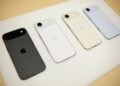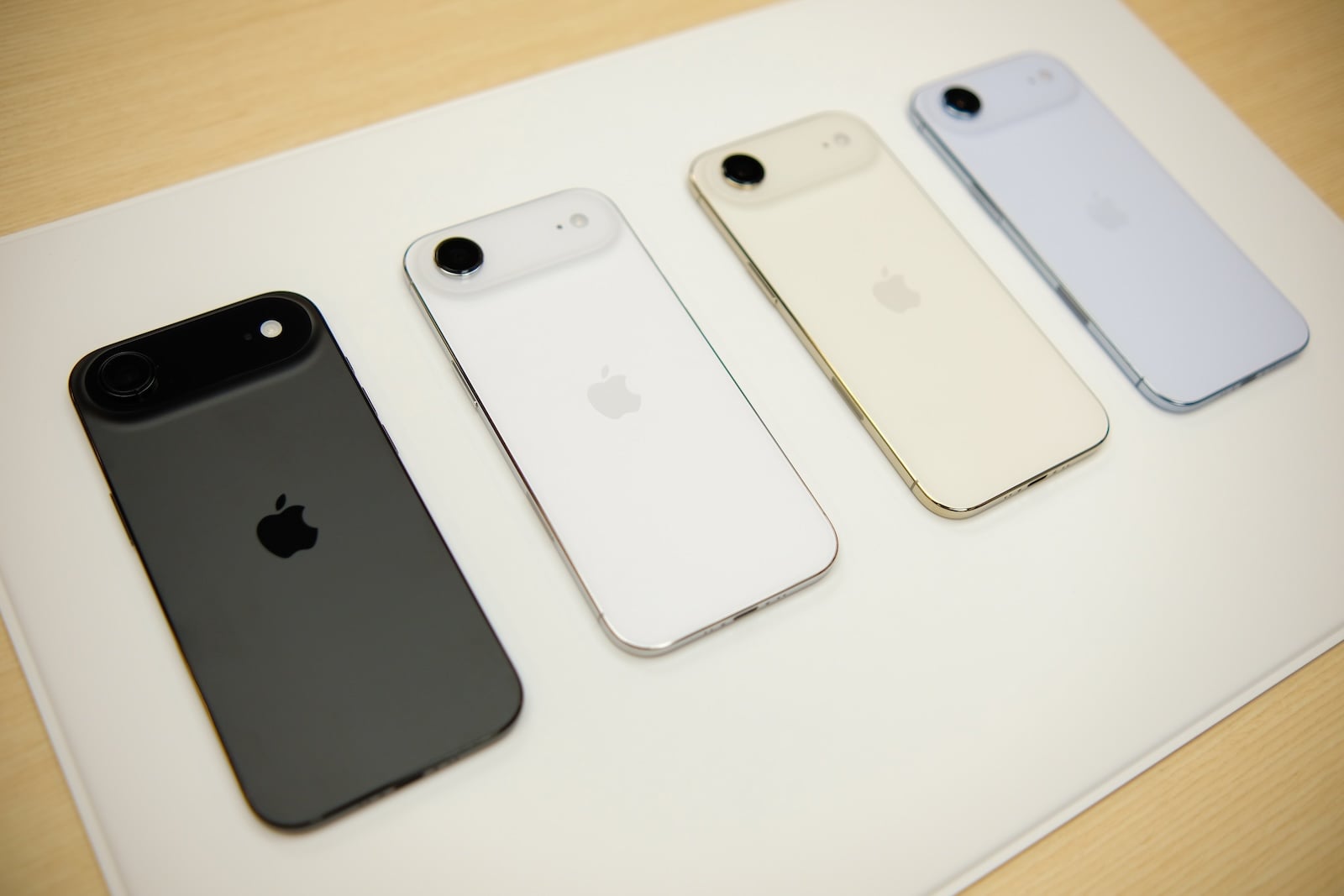
The iPhone Air is becoming a success faster than many expected. Initial data from independent analyses show that Apple's new model is being received significantly better than previous attempts to establish a fourth device in the iPhone lineup. Especially when compared to the iPhone Plus, it becomes clear that the strategy has fundamentally changed.
Apple has repeatedly attempted to position an additional model between its standard and Pro devices in recent years. However, neither the iPhone mini nor the later Plus variants achieved lasting success. Both lines fell short of expectations and reached only a relatively small target audience.
With the iPhone Air, Apple is taking a different approach. Instead of defining itself solely through size or compromises in functionality, the focus here is primarily on the ultra-thin design. Current figures show that this approach is working better than previous concepts.
iPhone Air significantly outperforms iPhone 16 Plus
Data from speed tests collected by Ookla via crowdsourcing provides concrete insights into usage. In the fourth quarter of 2025, the iPhone Air accounted for 6.8 percent of the sample within the iPhone 17 generation in the US.
For comparison: The iPhone 16 Plus only achieved 2.9 percent market share in the same period a year earlier. This means the iPhone Air has more than twice the market share of the Plus model at its respective launch.
These figures are considered a clear indication that the iPhone Air has achieved significantly higher acceptance among buyers.
Impact on the Pro models
The success of the iPhone Air has not been without consequences for the rest of the model lineup. The iPhone 17 Pro, in particular, has lost market share year-on-year.
- Decline from 34.9 percent to 30.6 percent
- The iPhone 17 Pro Max remains virtually unchanged at 55.5 percent.
The data suggests that around 4 percent of buyers consciously switch from the Pro model to the iPhone Air, foregoing a better camera and higher processing power in order to get a thinner and lighter device.
International markets are showing even stronger demand
Outside the US, the iPhone Air's market share is even higher. According to Ookla data, the model achieves the following market shares:
- South Korea: 11.2 percent
- Japan: 8.9 percent
- Singapore: 8.4 percent
These figures show that international demand is sometimes significantly stronger than in the US market.
Modem performance in detail
In addition to market penetration, technical performance was also examined. The iPhone Air uses Apple's own C1X modem. Here's an overview of the results:
- Download speed: comparable to the Qualcomm X80 in the iPhone 17 Pro Max
- Latency: better than the Qualcomm modem in 19 out of 22 tested markets.
- Upload speed: Qualcomm remains in the lead, with up to a 32 percent advantage in some regions.
Ookla cites the further developed Uplink Carrier Aggregation (UL-CA) of the Qualcomm X80 as the reason for the lag in upload speed.
Apple's previous model strategy in retrospect
The development of the iPhone Air can only be fully understood in the context of earlier models:
- The iPhone mini underperformed expectations for over two generations.
- The iPhone 14, 15 and 16 Plus models fared even worse.
- Both versions only managed to secure a niche fan base.
In contrast, the iPhone Air succeeded for the first time in successfully positioning a fourth model in the market, at least in the first few months after its market launch.
The iPhone Air is establishing itself as a mainstay in Apple's portfolio
The iPhone Air confirms for the first time Apple's strategy of meaningfully expanding its product range with an additional model. The data clearly shows that the device is being received significantly better than previous alternatives such as the Plus or mini models.
The most striking change is the shift within the model range. Some buyers are consciously choosing a slimmer design over the Pro performance. At the same time, demand for the Pro Max remains stable.
The iPhone Air also delivers solid technical results, especially in terms of download speed and latency, while there are still differences in upload speed.
Overall, there are many indications that the iPhone Air could play a more permanent role in the iPhone portfolio in the long term than its predecessors. (Image: Shutterstock / Framesira)
- Apple teases AI improvements for WWDC 2026
- Apple announces: WWDC 2026 will take place from June 8th to 12th.
- Apple: John Ternus in focus as possible CEO
- Apple celebrates 50 years: Big celebration planned at Apple Park
- Terafab: Elon Musk plans the world's largest chip factory
- Apple raises prices for external storage media
- Apple planned to acquire Halide but failed
- Elon Musk: Jurors see fraud in Twitter deal
- WhatsApp is planning automatic translation for iPhone
- Apple's Siri: New features could launch soon
- Old Blackberry deals are catching up with Apple in court
- OpenAI develops desktop super app for macOS
- Apple achieves record launch with affordable MacBook Neo
- Apple earned $900 million from AI Apps in 2025
- Apple grows strongly in 2026 despite a weak China market
- Google is working on a Gemini app for macOS users
- Apple Health is getting smarter with AI through Perplexity Health
- Apple extends its 50th anniversary celebration to more countries
- Apple vs. Masimo: Decision on the Watch function
- Apple warns of attacks: iOS update now required
- AppleCare One: Hints of an imminent launch in Europe