Apple is considered one of the world's most valuable technology companies. But behind the iPhone, iPad, and Mac lies a supply chain heavily reliant on Taiwan. A comprehensive investigative report by the New York Times now reveals the seriousness with which the situation is viewed internally: Apple CEO Tim Cook participated in a secret CIA meeting in July 2023, where warnings were issued about a potential Chinese attack on Taiwan by 2027. For Apple and the entire tech industry, such a conflict would have massive economic consequences.
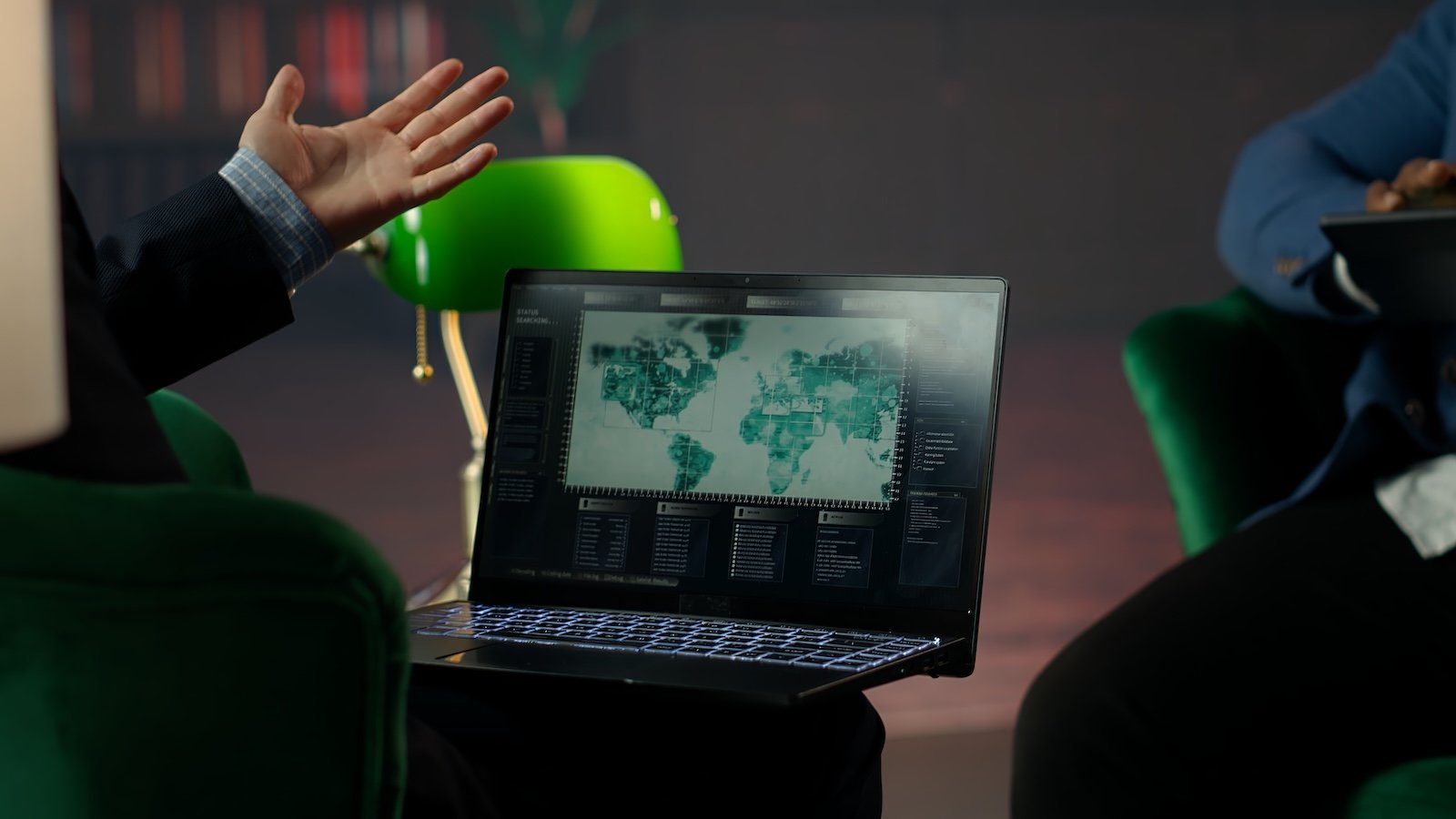
The meeting, which was not publicly disclosed, apparently took place in a secure room in Silicon Valley. It was organized at the request of then-US Commerce Secretary Gina Raimondo, who was frustrated that large technology companies were unwilling to shift more of their chip production from Taiwan to the US (via NYT).
The US government wanted to clearly demonstrate the security risks to the industry, as dependence on Taiwan for semiconductors is considered one of the United States' greatest strategic weaknesses.
The secret meeting in July 2023
The meeting was attended by Apple CEO Tim Cook, Nvidia CEO Jensen Huang, AMD CEO Lisa Su and Qualcomm CEO Cristiano Amon.
CIA Director William Burns and the Director of National Intelligence, Avril Haines, presented current intelligence information about China's military plans.
The assessment: China could take military action against Taiwan by 2027.
After the presentation, Cook reportedly told officials he would "sleep with one eye open" from now on. This statement underscores how seriously Apple took the warning.
Previous warnings at the White House
A similar secret meeting had already taken place at the White House in late 2021. At the time, however, several executives reacted with skepticism. Much of the information presented was already publicly available.
In early 2021, a high-ranking US military official told Congress that President Xi Jinping was planning to prepare China's armed forces for a possible invasion of Taiwan by 2027. The warning signs had therefore been present for some time.
Apple's dependence on Taiwan and TSMC
Apple's central problem is its strong dependence on the Taiwan Semiconductor Manufacturing Company (TSMC). The company produces around 90 percent of the world's most advanced chips.
This includes all custom-designed Apple chips for iPhone, iPad, and Mac. Without these high-performance processors, Apple's product strategy would not be feasible.
A confidential 2022 report, commissioned by the Semiconductor Industry Association and reviewed by The New York Times, reaches a stark conclusion: Losing access to Taiwanese chips could trigger the worst economic crisis since the Great Depression. According to the report, US GDP would plummet by 11 percent.
Another Bloomberg report from January 2024 estimates that a military conflict over Taiwan could cost the global economy more than 10 trillion US dollars.
For Apple, such an outage would not only mean production problems, but would represent a fundamental business risk.
Political pressure and the CHIPS and Science Act
Jake Sullivan, former President Biden's national security advisor, described the US's dependence on Taiwan for semiconductors as one of its biggest weaknesses. In an interview, he said, in essence:
This is crazy. We have to do something about it.
The political response was the CHIPS and Science Act of 2022. The law provides approximately 50 billion US dollars in government subsidies for the construction of semiconductor factories in the United States.
The goal is to encourage companies like Apple to rely more on domestic production and to make supply chains more resilient.
Apple's initial reluctance
Despite warnings and government support programs, the tech industry initially hesitated. Apple, too, was initially unwilling to commit to purchasing more expensive chips from US factories. The reason lies in the costs and the technology:
- Chips produced in the USA are more than 25 percent more expensive than chips manufactured in Taiwan due to higher material, labor and approval costs.
- TSMC's factories in Arizona currently operate with technology that is a generation behind the most advanced manufacturing in Taiwan.
For Apple, which focuses heavily on performance, efficiency and technological leadership, this difference is crucial.
Strategy change: Apple invests billions in the USA
Apple has since adjusted its stance. Last summer, Tim Cook was in the Oval Office and pledged to invest $100 billion in the US to support TSMC and other chip manufacturers.
In addition, Apple reportedly began holding full-day technical meetings with Intel to assess their production capabilities. This suggests that Apple is seriously evaluating alternative manufacturing options. The strategy aims to reduce reliance on Taiwan, even if it means higher costs.
TSMC is massively expanding its US production
TSMC itself has now committed investments of around 165 billion US dollars in the USA. Plans include acquiring land for at least five more plants in Phoenix, Arizona.
The Arizona plant recently produced Nvidia's first AI chip manufactured in the USA. However, this example also illustrates the continued dependence on Taiwan: the chips still have to be sent back to Taiwan for further processing. A complete relocation of the most advanced production steps to the USA has therefore not yet been achieved.
Apple between economics and geopolitics
The CIA's warning to Apple and other tech companies highlights how closely economic interests and geopolitical risks are intertwined. Apple finds itself in a situation where strategic decisions are relevant not only to business but also to security policy.
The heavy reliance on Taiwan and TSMC remains a key risk. At the same time, investment commitments from Apple and TSMC in the US show that the industry is responding to the warnings.
Whether a conflict over Taiwan will actually occur remains to be seen. What is clear, however, is that Apple is reassessing its supply chain and investing billions to protect itself against a potential scenario until 2027 or beyond. (Image: Shutterstock / DC Studio)
- Apple offers a glimpse into its Mac mini factory in Texas
- Apple will now manufacture the Mac mini directly in the USA
- Apple introduces Sales Coach app for iPhone & iPad
- iOS 26.4 Beta 2: All features and adjustments
- WhatsApp is working on scheduled messages
- David Pogue offers insights into "Apple: The First 50 Years"
- Anthropic raises serious allegations against China
- iOS 26.4: Two apps get the old search layout
- iOS 26.4 Beta 2 tests secure RCS chats with Android
- iOS 26.4 Beta 2 launches: Apple continues testing phase
- Apple TV is betting on Wonder Pets Season 2
- Apple Sports expands soccer and tournament schedules
- Apple TV shows new thriller "Unconditional"
- iOS 26.3.1: Apple tests new iPhone update
- How Trump's import tariffs are making life difficult for Apple
- WhatsApp is testing a feature to hide texts
- Apple Ferret-UI Lite: The smart way to on-device AI
- Illegal tariffs: Will Apple get its 2 billion back?
- MacBook Air M1 sold out: What does Apple plan next?
- Perplexity brings the Comet browser to the iPhone
- Apple and the battle over NFC fees in Brazil
- Avalanche disaster: iPhone becomes a lifesaver
- Apple vs. Jon Prosser: Trial gains momentum