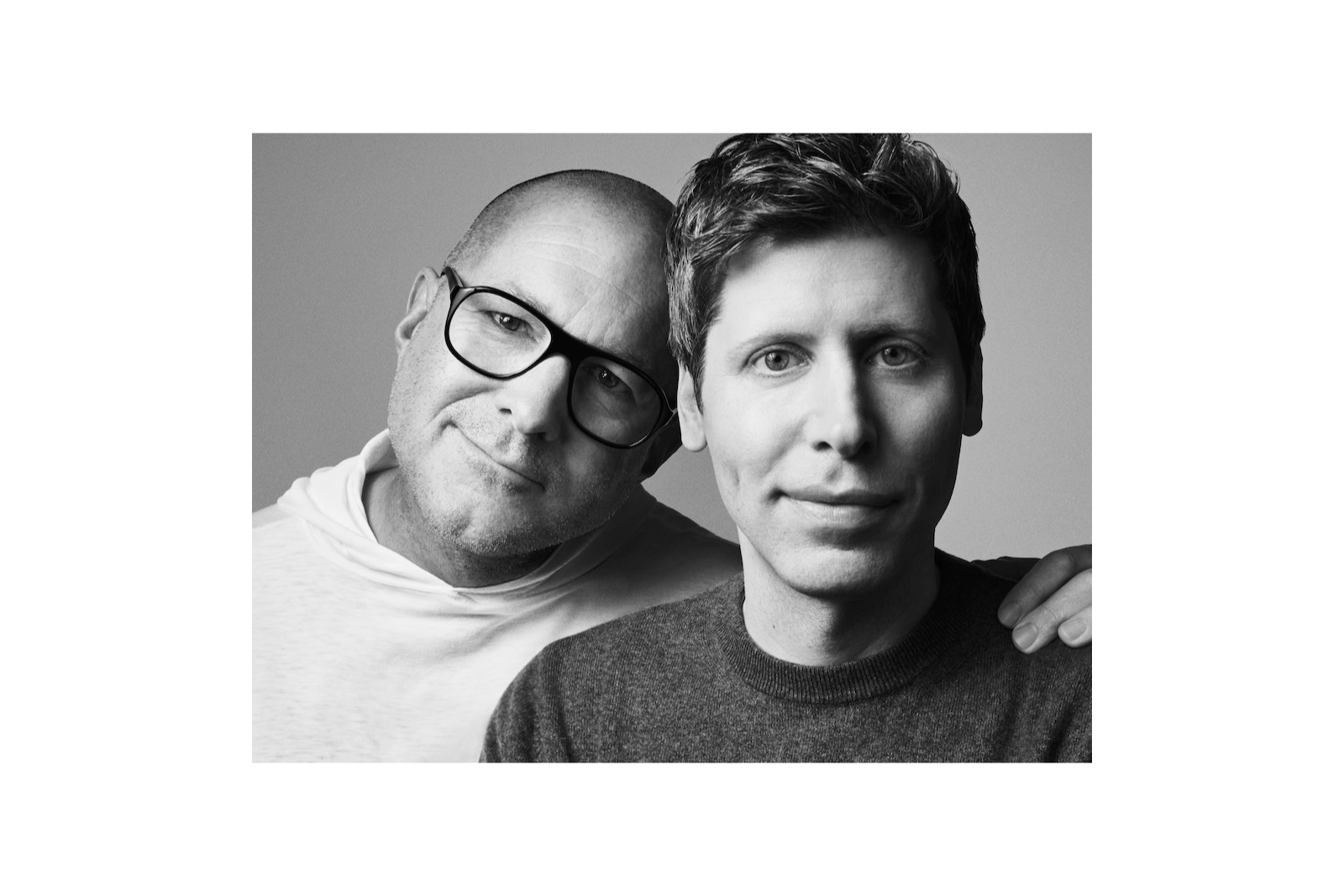
The legal dispute over the name "io" has taken on a new dynamic. The conflict between OpenAI, Sam Altman, Jony Ive, and the smaller company iyO demonstrates how complex trademark law has become in the context of new AI products.
The dispute between OpenAI and iyO revolves around who has the right to use the name "io" for AI products. A recent ruling by the 9th Court of Appeal confirms that OpenAI remains prohibited from using the "io" trademark. This represents a setback for Sam Altman and Jony Ive, but an important interim victory for iyO. The case is complex, the details are crucial, and the legal battle is expected to drag on for years.
Background of the conflict
At the beginning of the year, OpenAI announced its acquisition of Jony Ive's company, io. Shortly thereafter, iyO Inc. filed a lawsuit alleging trademark infringement. They claimed the names io and iyO were too similar and operated in the same market.
In the following days, several documents were published that provided a more complete picture of the conflict. These included, among other things, the following points:
- Jason Rugolo, CEO of iyO, had tried to poach Evans Hankey. At the time, she was Vice President of Industrial Design at Apple, before later joining Jony Ive's company.
- Sam Altman and Jony Ive had already decided to use the name io in mid-2023.
- At the beginning of 2025, Rugolo actively sought investors and approached Sam Altman for this purpose. The proposed project concerned the future of the human-computer interface.
Sam Altman declined the offer, explaining that he was already working on something competitive. Rugolo responded with, "Uh oh. Shall we collaborate?".
OpenAI's response
iyO later claimed in the lawsuit that OpenAI intended to enter the same market with a similar name and similar products. The plan was for AI-powered in-ear headphones and other devices controlled through natural language interaction. OpenAI denied this. The company stated:
- The first product under the name io will not be an in-ear device or a wearable.
- Rugolo disclosed internal company information without being asked.
- Rugolo has proposed to OpenAI that they buy iyO for $200 million.
Despite these arguments, the court initially ruled in favor of iyO. It issued a preliminary injunction, prohibiting OpenAI from continuing to use the name io. Subsequently, OpenAI removed the announcement video and deleted all references to io from its website.
The appeal and the new decision
OpenAI appealed to the 9th Court of Appeal, seeking to overturn the injunction. However, the court ruled in favor of iyO, upholding the injunction on several key points.
Risk of confusion
The court found that IO and iyO sound phonetically similar. Since both companies develop products based on AI-driven natural language interaction, there is a clear connection between their offerings.
Reverse risk of confusion
Additionally, the court recognized the risk of so-called reverse confusion. This occurs when a large, financially powerful junior user dominates the market, creating the impression that the actual trademark owner is an imitator. In this case, OpenAI, led by Sam Altman, could overshadow iyO's brand recognition and generate confusion.
Irreparable damage
The court also found that OpenAI's aggressive market launch could jeopardize iyO's funding efforts. The smaller company's brand value had been put under pressure by OpenAI's actions.
The injunction therefore remains in effect. OpenAI is still prohibited from using the name io for products similar to iyO's technologies.
What happens next
The confirmation of the temporary restraining order does not end the conflict by any means. The case is returned to the district court for another hearing on the order. The court can then decide whether the restrictions will remain in place, be eased, or even be further tightened. The timeline suggests a very lengthy legal battle.
- The preliminary ruling is planned for April 2026.
- The taking of evidence is expected to continue beyond 2027.
- A possible jury trial might not take place until 2028.
The dispute surrounding iyO will therefore continue to play a role for years to come, ensuring that Sam Altman, Jony Ive and iyO remain in the public eye.
How the legal battle shapes the strategy of Sam Altman and Jony Ive
The conflict demonstrates how closely trademark law, product strategy, and communication are intertwined. Sam Altman and Jony Ive wanted to usher in a new era of AI hardware with iyO. Legal hurdles have initially stalled these plans. The appeals court's decision has given iyO a boost. However, a final resolution will still take time. The dispute will continue to shape the industry and highlights the importance of clear brand management, especially when new AI devices are intended to disrupt the market. (Image: OpenAI)
- Apple confirms departure of two more executives
- Apple TV: Severance Season 3 with a new release schedule
- Apple TV surprises with release date for Tehran Season 3
- Russia blocks FaceTime and tightens digital pressure
- iPhone Air is rapidly losing value according to current market analysis
- The lack of Night Mode in Portrait mode on the iPhone 17 Pro is drawing criticism
- Apple announces the winner of the 2025 Podcast Awards
- Apple presents the winners of the App Store Awards 2025
- Apple: Why Alan Dye's departure is seen as an opportunity
- Apple celebrates creativity with glowing projections in London
- Apple loses UI chief designer Alan Dye to Meta
- iOS 26.2 RC released: All new features at a glance
- Apple TV expands its offerings with Your Friends & Neighbors S2
- Following Apple's opposition, India scraps its mandatory app plans
- Apple study shows potential of modern heart sensor technology
- Apple in focus: EU allows antitrust lawsuit from the Netherlands
- iPhone Air benefits from new firmware for MagSafe battery
- The iPhone 17 has Apple celebrating significant global sales records
- Apple and app tracking are in the spotlight of German antitrust authorities
- Apple Health and ChatGPT: New leak reveals possible integration
- Samsung presents a triple-folding smartphone