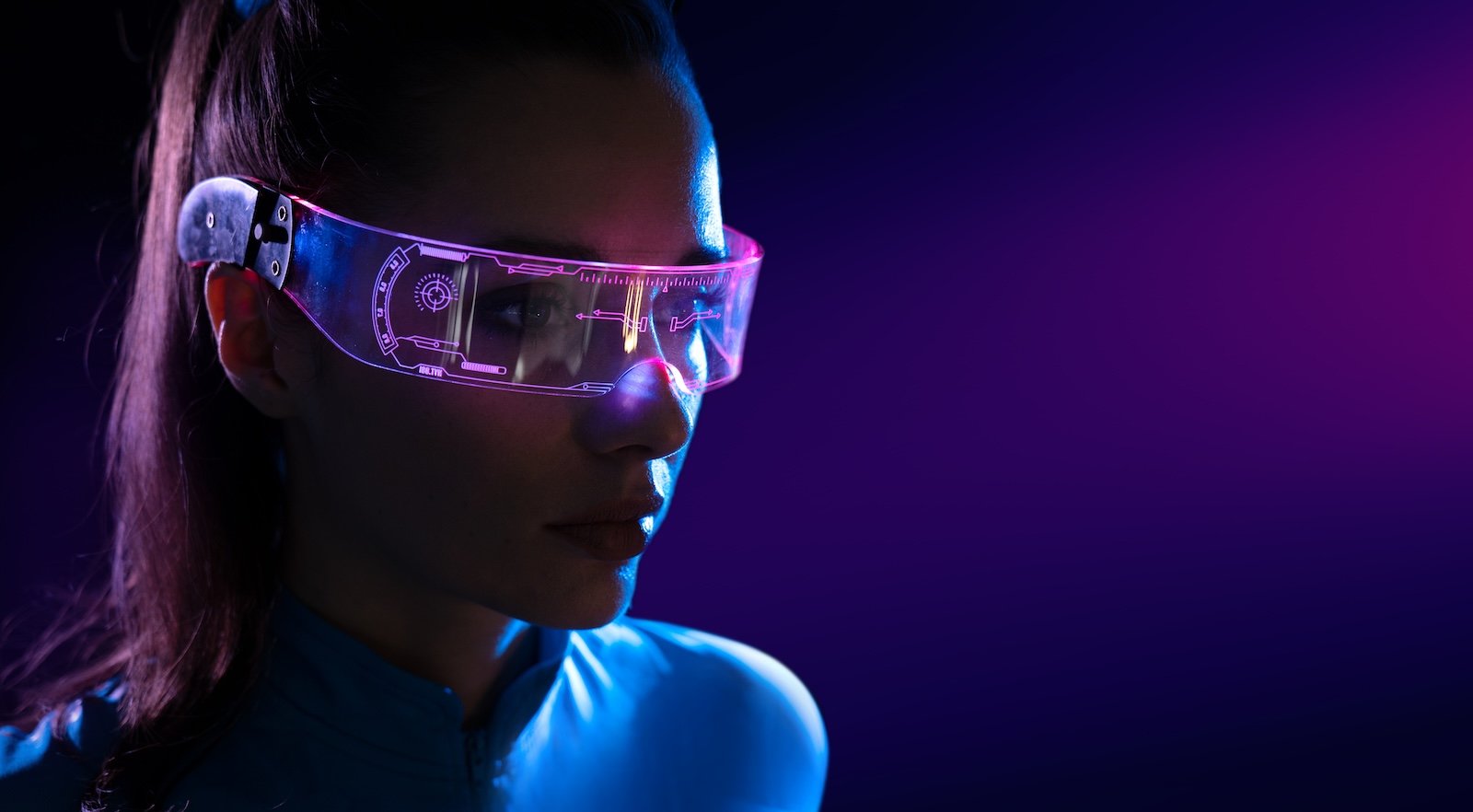
Apple is working on AI smart glasses – and development is clearly gaining momentum. Bloomberg recently reported that Apple is accelerating the development of three new AI wearables: smart glasses, an AI pendant, and AirPods with integrated cameras. All three products share the same overarching goal: to integrate Siri more deeply and naturally into everyday life. Below, we focus on the smart glasses, which are the most technically and strategically interesting of the three products.
The idea of Apple eventually releasing a pair of glasses isn't new. For years, rumors have circulated about Apple AR glasses that would overlay digital information onto the user's vision. This project is currently on hold. For now, the Apple Vision Pro serves as the AR flagship in the portfolio, but due to its price and size, it's far from being a mass-market product.
Meanwhile, Apple has shifted its focus. Instead of full augmented reality, the company is now aiming for a sleeker, more practical option: AI glasses that are conceptually based on the Meta Ray-Bans, but will forge their own technological path. The goal is not to replace the Vision Pro, but to establish an entirely new device category within the Apple ecosystem.
The market is ripe - Meta has shown it
To understand why Apple is now entering this market, it's worth taking a look at the MetaRay-Bans. Launched in late 2023, these glasses have since proven to be a genuine surprise success. Essentially, they combine cameras, microphones, and speakers into a wearable device that connects the user to MetaAI. This allows users to take photos and videos, listen to music, and have conversations with an AI assistant about their immediate surroundings—all without taking their smartphone out of their pocket.
The fact that the glasses were so well received despite Meta's reputation as a privacy-conscious company says a lot about the appetite for this type of technology. People want AI assistants that are discreet, fast, and hands-free. Apple has recognized precisely this need.
What Apple is planning technically
According to recent reports, Apple's AI glasses will be equipped with two camera lenses. One lens will handle computer vision – analyzing and understanding the environment in real time. The second lens will be used for traditional photo and video recording. This would mean that Apple's first model would already be technologically more advanced than the current generation of MetaRay glasses.
Another detail is the question of the design. Apple reportedly initially considered using an external battery to house all the components. However, this approach was apparently abandoned. Apple has since found a way to integrate all the parts directly into the frame. This might sound like a minor detail, but it isn't: an external battery pack would have significantly impacted comfort and would hardly have been compatible with Apple's design standards.
The $2 billion acquisition that could change everything
Perhaps the most interesting element surrounding Apple's AI glasses is a company acquisition that initially received little attention. Apple recently acquired the startup Q.ai for approximately $2 billion. Little is publicly known about Q.ai, but the company's specialization is clear: machine learning systems for interpreting silent speech input.
This sounds abstract, but it's a direct attack on one of the biggest practical problems with voice assistants. Anyone wanting to talk to Siri, Google Assistant, or Meta AI today has to speak loudly and clearly. Even whispering is still a challenge in noisy environments or for many voice models. In practice, this means that hardly anyone uses their voice assistant on the subway, in the office, or in a café because it's simply unpleasant to talk loudly to their device.
Q.ai is said to have developed systems that solve precisely this problem. Firstly, the company is working on models that can reliably recognize very quiet or whispered speech. Secondly, Q.ai has researched technologies for analyzing micro-facial movements – that is, minimal mouth movements that occur during speech production without actually producing audible speech.
In other words, the glasses could eventually understand what is being said without anyone nearby hearing a single word.
Why this would be a real game changer
Voice assistants have existed for over a decade, but have never truly become an everyday tool. The main reason for this is less the quality of the answers than the hurdle of using them. Speaking out loud to a device feels unnatural or embarrassing to many people – especially in public.
If Apple manages to overcome this hurdle, it will not only change the appeal of its own glasses, but potentially also the overall societal perception of voice assistants. Glasses that understand what is being said without the need to speak aloud would become indispensable in everyday life – for cooking, exercising, commuting, or simply navigating an unfamiliar place.
Siri's role in Apple's grand plan
The AI glasses are not an isolated project. They are part of a broader strategy with which Apple aims to make Siri the central interface between humans and technology. Together with the planned AI pendant and the camera-equipped AirPods, an ecosystem of AI wearables is being created that will complement each other and make Siri accessible in almost every everyday situation.
That Apple is accelerating its efforts right now is no coincidence. Competition from Meta, Google, and various other providers is growing. At the same time, Apple has recently attracted more attention with its own AI initiatives under the umbrella of Apple Intelligence. The wearables are intended to take these AI capabilities out of the screen and bring them into the physical world.
Premium has always been Apple's answer
One thing is already almost certain: Apple's AI glasses will be more expensive than the Meta Ray-Bans. This was the case with the Apple Watch, the AirPods, and every other Apple product that entered a new category. The price premium is part of the business model.
The crucial question, however, is whether Apple can deliver enough added value to justify this premium. If Q.ai's technology actually works and silent voice input becomes a reality, Apple has a compelling argument. Many people who currently avoid voice assistants because using them in public is too uncomfortable could become users – precisely when no one notices they are communicating with their device.
A precise release date is still pending. However, it appears that a market launch is expected sometime next year. Until then, it remains to be seen how far Apple has actually refined the technology – and whether the combination of design, camera hardware, and silent voice control ultimately lives up to the current reports. The best products for you: Our Amazon storefront offers a wide selection of accessories, including those for HomeKit. (Image: Shutterstock / conrado)
- Apple Privacy Policy: Why no competitor can keep up
- CarPlay in iOS 26.4: These are the new features
- Apple Music in iOS 26.4: New features in detail
- Apple AirPods 2026 and 2027: Here's what's planned
- iOS 26.4 Beta launches without new Siri features
- Apple continues to pursue a clear course in AI
- Apple Experience on March 4th: Possible Highlights
- OLED iPad mini: Is a major upgrade coming?
- AirPods Pro 3: Second version expected to bring new AI features
- Apple 2026: These Home devices are planned
- Mac Studio 2026: What's in the next update
- iPhone 18 Pro: Why the C2 modem is becoming important
- MacBook Pro 2026: Why waiting is worthwhile
- MacBook Air with M5: All the details about the upcoming update
- New MacBook planned: Affordable entry-level model with A18 Pro
- Apple TV makes Silo bigger: All the info on season 3
- Apple plans to launch two new products for the mass market in 2026
- Apple TV: The February 2026 Highlights at a Glance
- Apple in February 2026: iOS 26.3, Siri and important dates
- iPhone 18 Pro: All the leaks, technology, and reasons to wait
- iPhone: iOS 26.3 reveals Apple's modem strategy
- AirTag 2 vs. AirTag: All new features & differences at a glance
- AirTag 2: Meaningful improvements without a complete overhaul
- AirTag 2: All the improvements in tracking and technology